3 days in Ainhoa: villages, mountains and the Basque coast
Three days in Ainhoa is enough to discover several very different sides of the French Basque Country.
From the village, you can walk into the foothills of the Pyrenees, explore some of the best-known villages of the inland Basque Country and still spend a day beside the Atlantic. The Spanish border is only a few kilometres away too, so even a short stay can include both France and Navarre.
The temptation is to try to see everything.
Don’t.
The pleasure of staying in Ainhoa is that distances are relatively short, so there is no need to turn every day into a race from one attraction to another.
Here is how we would spend three days in Ainhoa.
Day 1: Discover Ainhoa and the surrounding hills
Start close to home.
Ainhoa is one of the Plus Beaux Villages de France, but it is small enough to explore slowly rather than following a complicated sightseeing route.
Morning: explore the village
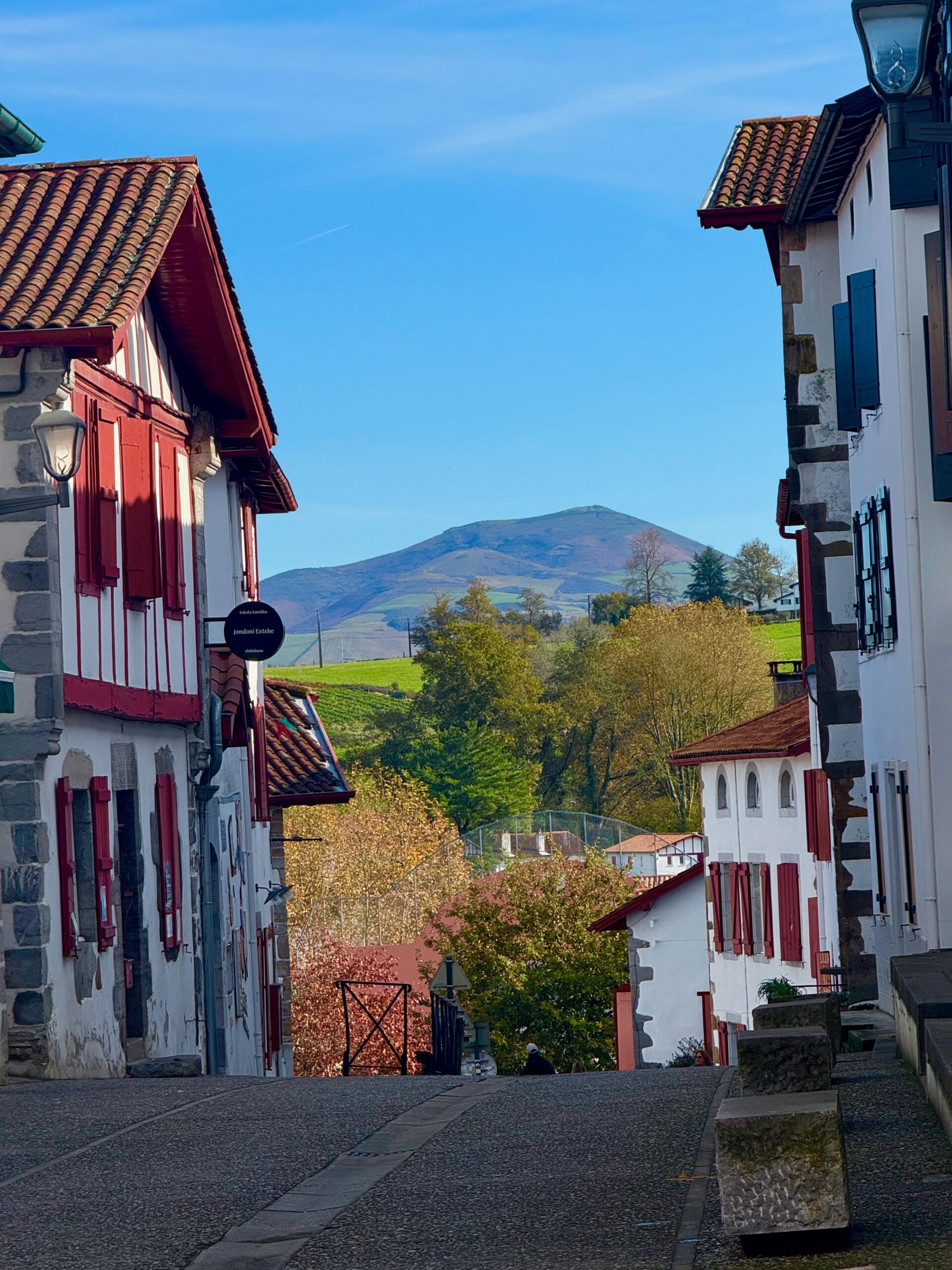
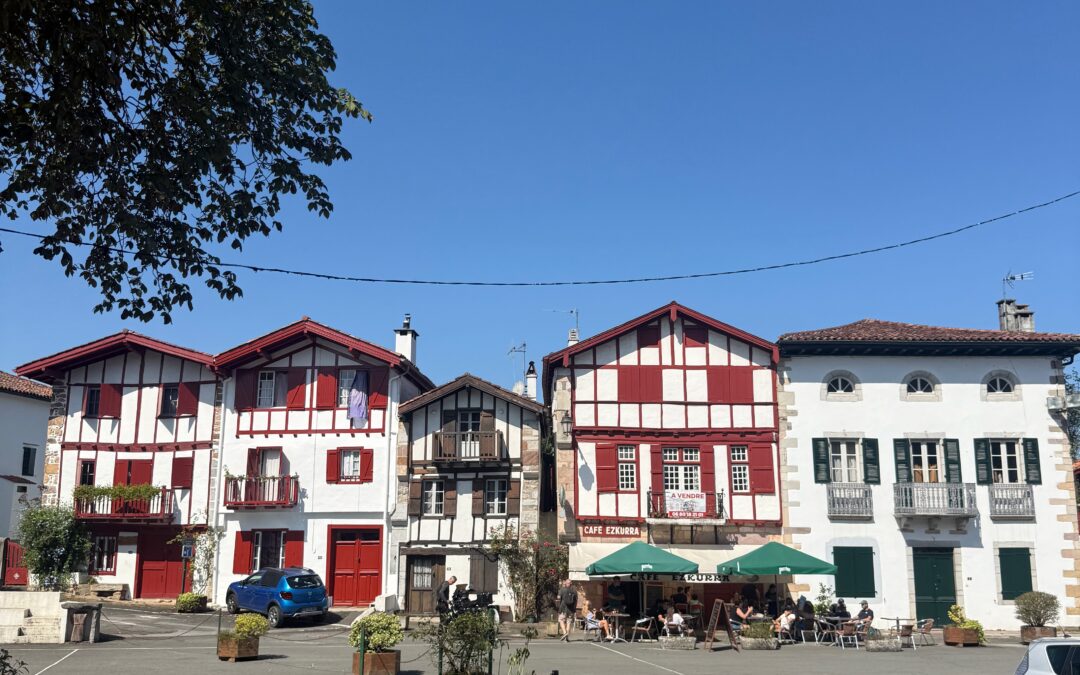
Walk along Ainhoa’s main street and take time to look at the traditional white-and-red houses rather than simply photographing them.
The village developed along an old route between Bayonne and Navarre and later became part of the Camino Baztanés, one of the historic routes towards Santiago de Compostela.
Visit the Church of Notre-Dame-de-l’Assomption and the cemetery beside it, where you can see traditional Basque funerary stelae.
Ainhoa becomes much more interesting once you understand why the village is here and how closely its history is connected to the border and the Camino.
Late morning: walk to the Hawthorn Chapel
If the weather is good, walk up towards the Hawthorn Chapel — Chapelle de l’Aubépine above the village.
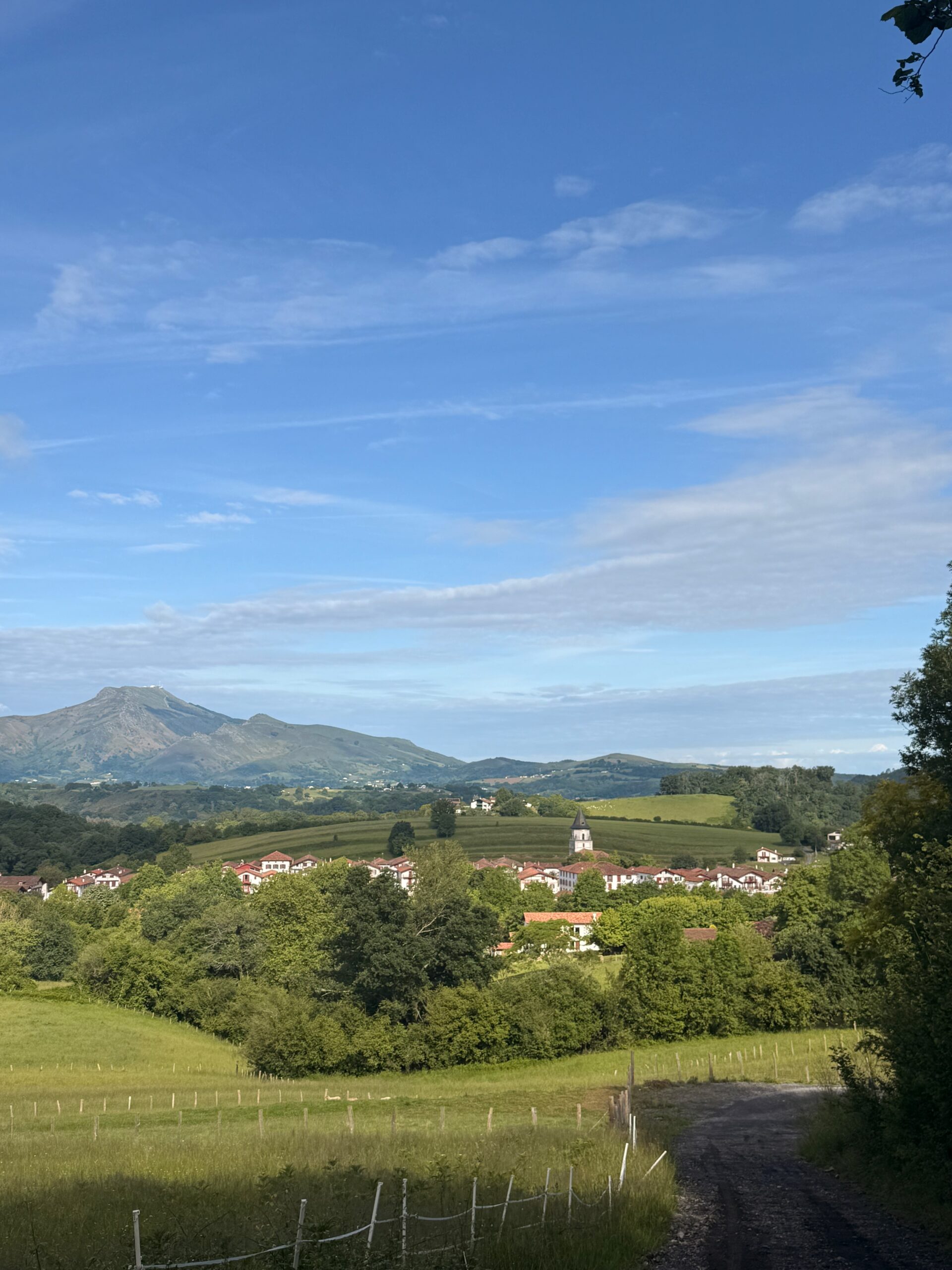
The climb gives you a completely different view of Ainhoa, with the village below and the surrounding hills stretching towards the Spanish border.
You can simply walk to the chapel and back or continue further depending on your experience, the weather and how much walking you want to do.
Take proper shoes. The Basque countryside may look gentle from below, but paths can become steep and muddy surprisingly quickly.
→ Discover hiking around Ainhoa
Lunch: stay local
There is no need to rush away from Ainhoa for lunch.
Part of the pleasure of the first day is simply settling into the rhythm of the village rather than immediately ticking off another destination.
Afternoon: explore the countryside
Keep the afternoon flexible.
You might take a shorter walk around Ainhoa, drive through the surrounding countryside or simply spend some time noticing the landscape you will see throughout your stay: sheep pastures, wooded slopes, old farmhouses and, occasionally, Pottoks, the small native ponies of the Basque mountains.
If you do encounter Pottoks, enjoy them from a distance. They are free-ranging animals rather than a tourist attraction.
→ Meet the Pottok, the native pony of the Basque Country
Day 2: Sare, Espelette and the inland Basque Country
For the second day, explore a little further without trying to collect every Basque village on the map.
Sare and Espelette make a very good combination.
Morning: Sare
Head first to Sare, another of the best-known villages of the inland Basque Country.
You can spend some time exploring the village itself or make the Grottes de Sare the main activity of the morning.
The caves are especially useful if the weather is uncertain and provide a fascinating introduction to the geology, prehistory and traditions associated with this part of the western Pyrenees.
If the weather is excellent and you would rather be outside, the countryside around Sare and La Rhune offers numerous walking possibilities instead.
Lunch: Sare or Espelette
Choose whichever suits the rhythm of the day.
There is no particular advantage in rushing through lunch just to fit another stop into the afternoon.
Afternoon: Espelette
Continue to Espelette, famous for the red peppers that hang from many of its white façades.
It is certainly popular with visitors, but the village is worth seeing, particularly if you take time to look beyond the souvenir shops.
This is also a good afternoon for discovering local food producers and picking up a few things to take home.
Look out for piment d’Espelette, local charcuterie, gâteau basque and sheep’s milk cheese.
Try some Ossau-Iraty
Ossau-Iraty is the traditional sheep’s milk cheese of the French Basque Country and Béarn.
It is particularly connected to the mountain landscape you see around Ainhoa, where sheep farming is still very much part of everyday rural life.
You do not even need to wait until Espelette to find it: there are producers in Ainhoa itself.
→ Discover Ossau-Iraty and where to buy it around Ainhoa
If it rains
This is an easy day to adapt.
Make the Sare Caves the main event, allow more time for lunch and local food, and explore shops and producers rather than trying to force a mountain walk into bad weather.
→ What to do in the French Basque Country when it rains
Day 3: Saint-Jean-de-Luz and the Atlantic coast
After two days inland, change the landscape completely.
From Ainhoa, the coast is close enough to make an easy day trip, and Saint-Jean-de-Luz is a very good place to start.
Morning: Saint-Jean-de-Luz
Arrive in the morning and explore the town on foot.
If the market is open, begin at Les Halles, where you can browse local fish, cheese, charcuterie, bread and seasonal produce.
Then walk through the old centre towards the harbour and the Grande Plage.
Saint-Jean-de-Luz has a different character from Biarritz: smaller, more sheltered and still strongly connected to its fishing-port history.
Lunch by the coast
Stay in Saint-Jean-de-Luz for lunch rather than treating it simply as a stop on the way somewhere else.
A long lunch followed by a walk beside the bay is a perfectly respectable Basque-country itinerary.
Afternoon: choose one coastal stop
This is where I would resist trying to do Guéthary + Bidart + Biarritz in a single afternoon.
Choose one.
Guéthary if you want a small coastal village and a walk overlooking the ocean.
Bidart if you want beaches and coastal paths.
Biarritz if you want a larger town, shops, architecture and the dramatic Atlantic coastline.
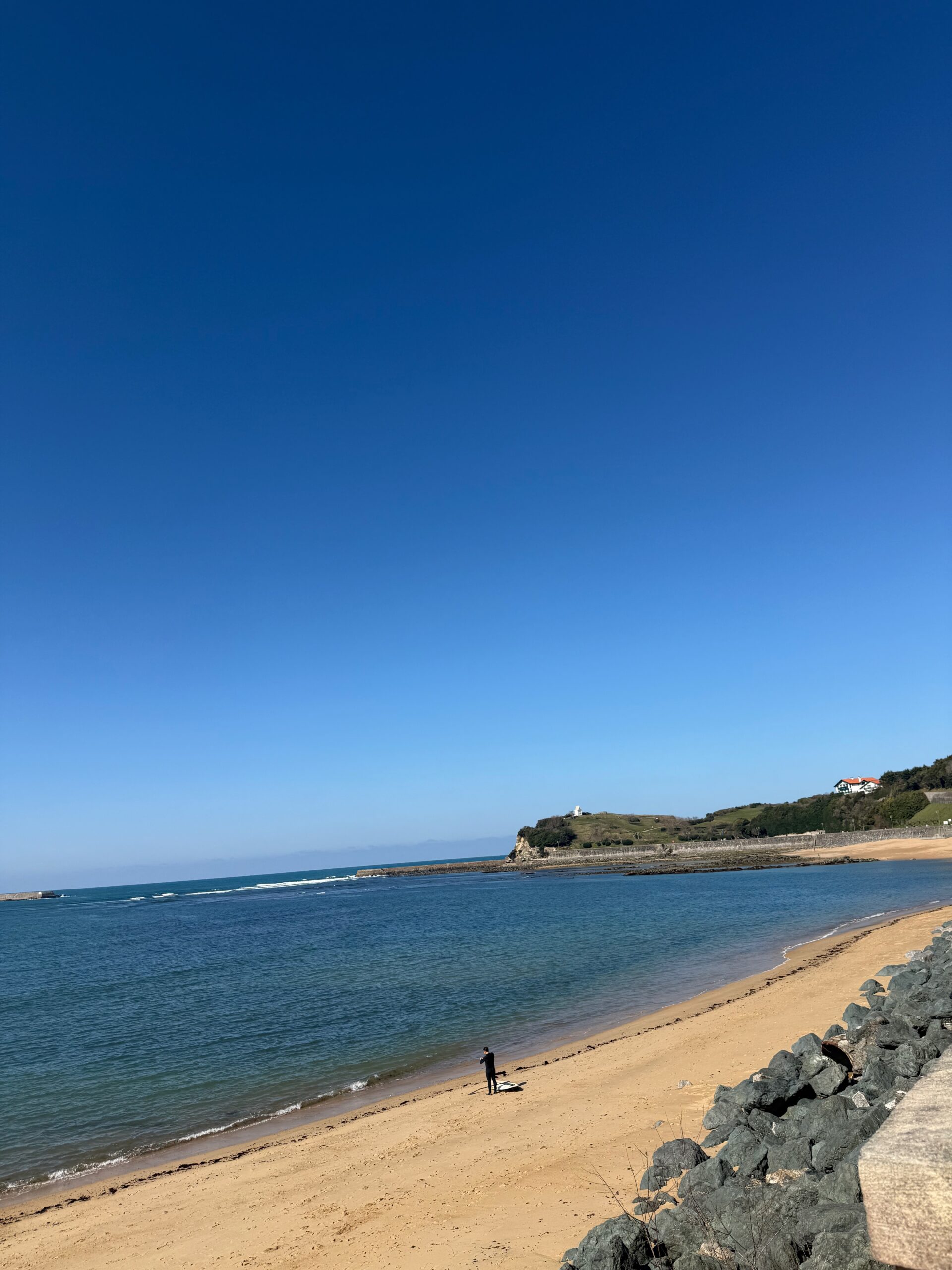
If it is warm enough, you may simply decide to stay on the beach instead.
→ Discover the best beaches near Ainhoa
Return inland for the evening
One of the nicest things about staying in Ainhoa is the contrast.
After a day beside the Atlantic, you drive back inland and the scenery changes surprisingly quickly: coast gives way to foothills, pasture and mountains.
It is one of the reasons Ainhoa works so well as a base rather than somewhere you visit briefly on a circuit.
If you have a fourth day: cross into Navarre
If you can add another day, this is where I would go.
The Spanish border at Dantxarinea is only a few kilometres from Ainhoa, and beyond it lie Urdax, Zugarramurdi and the Baztan Valley.
Urdax is known for its monastery and caves, while Zugarramurdi has a much darker historical association with the Basque witch trials.
Continue into the Baztan Valley and you find another landscape of green hills, traditional villages and old farmhouses.
Despite crossing an international border, it feels less like leaving the Basque Country than discovering another part of it.
For a longer day, San Sebastián is another possibility, although I would give the city an entire day rather than trying to squeeze it into an already busy itinerary.
When is the best time for three days in Ainhoa?
Spring and early autumn are particularly good for this itinerary.
The countryside is green, walking temperatures are generally comfortable and the villages and coast tend to be less crowded than during the busiest summer weeks.
Summer gives you the best chance of turning the coastal day into a proper beach day, although it is sensible to start walks early during hot weather.
And the Basque Country can be wet at any time of year.
That need not spoil the trip: caves, museums, markets, food and spas give you plenty of alternatives when the mountains disappear into cloud.
→ 10 reasons to visit the French Basque Country in spring
Do you need a car?
For this particular itinerary, a car makes life considerably easier.
Ainhoa itself is easy to explore on foot, and you can start several walks directly from the village, but having a car gives you much more freedom for Sare, Espelette, the coast and Navarre.
The advantage is that most of the journeys are relatively short.
You are not spending half the holiday driving between distant sights.
Why stay in Ainhoa?
Many visitors to the French Basque Country automatically think of staying on the coast.
The coast is wonderful, but staying inland gives you a different experience.
From Ainhoa, the mountains are on your doorstep. Sare and Espelette are nearby, Spain is only a few kilometres away, and Saint-Jean-de-Luz and the Atlantic are still close enough for an easy day out.
It means you can spend three days experiencing villages, mountains, food, the Camino and the ocean without changing accommodation every night.
And at the end of the day, you return somewhere much quieter than the coast.
That is what makes Ainhoa such a good base for discovering this corner of the Basque Country.
Continue exploring
→ Things to do in Ainhoa and the French Basque Country
→ Hiking around Ainhoa: Camino, GR10 and local walks
→ The history of Ainhoa
→ Ossau-Iraty: the sheep’s milk cheese of the Basque Country
→ Beaches near Ainhoa
→ What to do in the French Basque Country when it rains